
Most Investors Don't Know What to Ask Their Advisor.
Take the 5-Question Quiz to Find Out Where You Stand.
Most advisors sound similar. They use the same language, the same reassurances, and the same model portfolios. The difference between a good advisor and a costly one is not visible on the surface — it is revealed by the questions you ask.
This quiz tests five concepts that every investor approaching retirement should understand — and that most advisors rely on you not knowing. When you finish, you'll receive the complete Advisor Evaluation Bundle — five free guides built around the same framework.
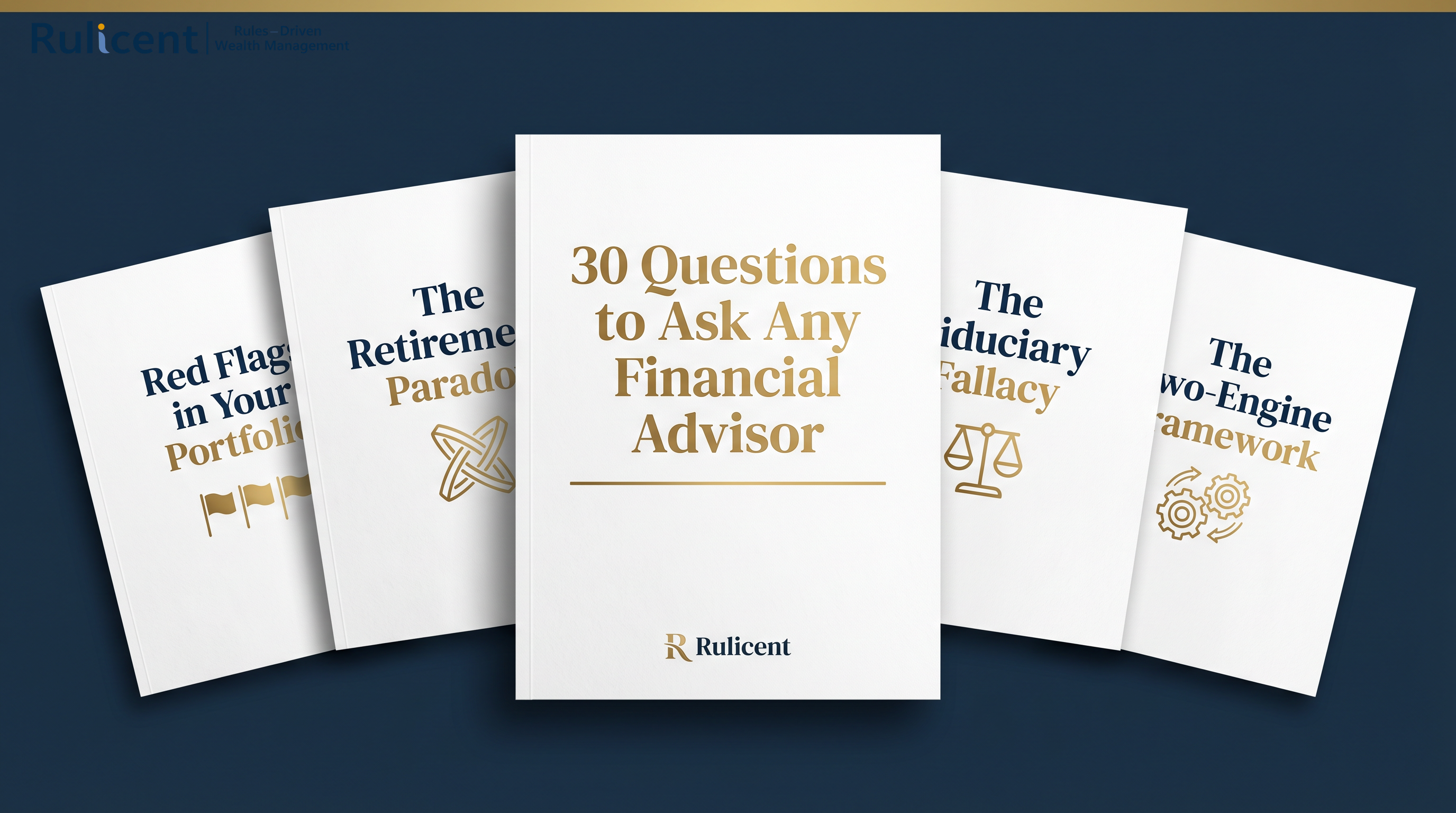
You Get. A complete evaluation toolkit.
Instant Access. No obligation.
30 Questions to Ask Any Advisor
1-page printable guide — use it in your next meeting
The Retirement Plan Paradox
207 pages · 35 chapters — the full framework
The Fiduciary Fallacy
Plain-language guide
Red Flags in Your Portfolio
Self-assessment checklist
The Two-Engine Framework
1-page visual model
Free · Instant Download ·
What This Quiz Actually Tests
Six questions. Two minutes. Each one targets a concept your advisor understands — and most investors don't. The gap between those two things is where retirement plans quietly fail.
How your money is actually managed
Most investors are placed into a fund and left there. The strategy never adjusts.
What sequence of return risk means for you
The order of your returns matters more than the average. Most plans ignore this entirely.
The fiduciary standard — and its limits
Fiduciary is a legal term. It does not mean what most investors assume it means.
How rebalancing actually works
Rebalancing is not active management. It is a reset — and it has a cost.
What your required rate of return is
Your plan should be built around a specific number — not a risk category.
Whether your advisor is actually accountable
Accountability requires structure — not just a title. Most investors never ask the right question.
We distilled 207 pages into 6 questions. It takes 2 minutes.
Most Advisors Sound the Same.
The Difference Is in the Details.
The advisory industry is built around reassurance. The same language, the same model portfolios, the same risk questionnaires. What separates a strategy built for your retirement from one built for a category is not visible on a brochure — it is revealed by the questions you know to ask.
Your portfolio may never adjust — by design.
Most investors are placed into a model portfolio and left there. The allocation holds whether markets are rising, falling, or rotating. That is not a strategy. It is an assignment. The fund was built to serve thousands of investors efficiently — not to manage your money for your specific retirement timeline.
The sequence of your returns matters more than the average.
A portfolio that loses 30% in year one of retirement and then recovers may never fully recover — because withdrawals are already reducing the base. This is sequence of return risk, and it is the mechanism that quietly ends more retirements than any single market event. Most plans are not built around it.
Fiduciary is a legal term. It is not a guarantee.
A fiduciary advisor is legally required to act in your interest. A non-fiduciary only needs to recommend something 'suitable' — which can include products that benefit them more than you. Most investors do not know which one they have. The label is not sufficient. The structure behind it is what matters.
"The 30 Questions were written for one purpose: to give any investor the ability to evaluate any advisor on the five decisions that actually determine whether a retirement strategy will work."
5 questions · 2 minutes · Instant access
The System Was Not Built to Teach You These Questions
Most financial advisory systems are built to scale — to serve thousands of households with consistency, compliance, and efficiency. That design works well for the firms that built it. It works less well for the individual investor trying to understand whether their specific strategy is built for their specific retirement.
"The system handed you answers without teaching you the questions."
The 30 Questions were written to close that gap. Not to create distrust — but to create the kind of informed conversation that protects you regardless of who your advisor is or what firm they work for.
"The right advisor welcomes these questions. The wrong one avoids them."
Common Questions
Before you take the quiz